Shower Tile That Lasts: What Happens Behind the Tile
The tile is the part you pick out. The layers behind it are the part that decides whether the shower is still dry in ten years.
October 17, 2026 · 4 min read
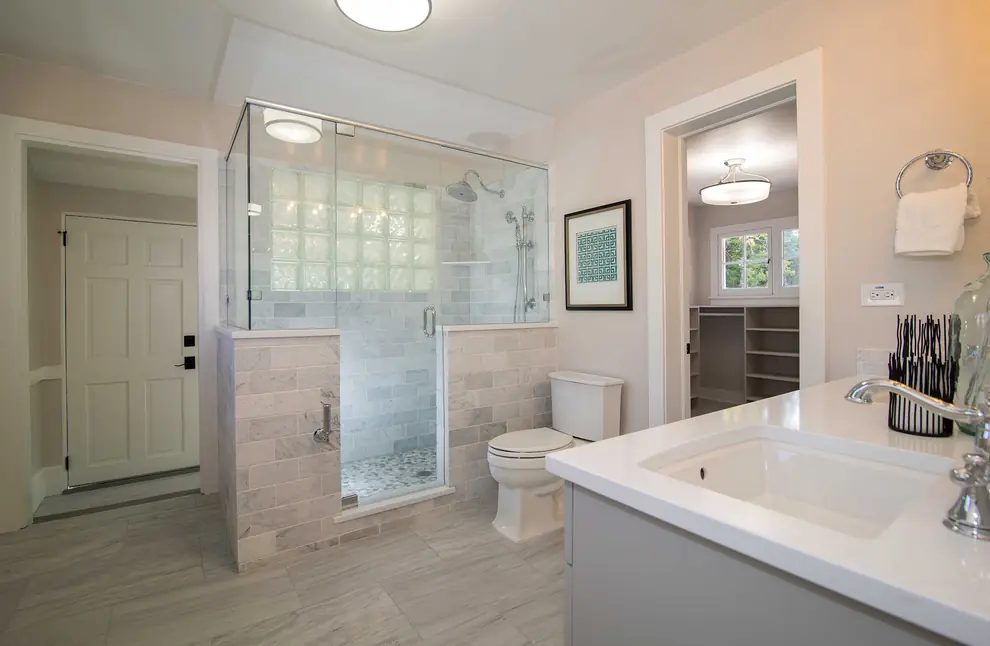
When people shop for a new shower, they spend their time on tile: size, color, pattern, whether to run it to the ceiling. All of that matters, and none of it keeps water out of your walls. A shower is a controlled leak. Every time you use it, water is sprayed at a surface that was never meant to be perfectly sealed, and the tile and grout are only the outermost layer of a system. The layers behind them do the real work. Home Improvement Express installs tile as one of its handyman services and as part of kitchen and bath remodels, and the questions below are the ones worth asking anybody who bids your job.
The layers, from the studs outward
Start at the framing. Over that goes a backing surface, which is a tile-ready board in most modern showers, chosen because it holds up to moisture better than ordinary drywall. Over the backing goes the waterproofing layer, which can be a sheet membrane or a liquid product rolled or troweled on, depending on the system. Then comes the thinset mortar that bonds the tile, then the tile itself, then grout in the joints, and flexible caulk at the corners.
Each layer has a job. Skip or botch one and the others can't make up for it. The most common misunderstanding is thinking the tile and grout are waterproof. They slow water down. They aren't the barrier.
The floor is a slope, not a flat pan
The shower floor has to pitch toward the drain, or water sits on it. That slope is built into the base under the tile, and it's easy to get wrong. A floor that looks fine when dry can hold a puddle along one edge, and standing water is a steady invitation for grout to break down and for mildew to settle in. Ask how the slope is set, and whether the installer checks it before the tile goes down.
Where leaks usually begin
- The drain connection, where the base meets the plumbing
- Inside corners and the line where the wall meets the floor
- Niches and benches, which have lots of small planes and edges
- Penetrations: valve trims, shower arms, and handheld holders
- Any joint between two different materials, like tile meeting a glass door frame
Those are all places where one surface meets another, and where the waterproofing has to wrap or seal rather than simply lie flat. Careful work at these spots is what separates a shower that lasts from one that starts weeping in a few years.
Grout, caulk, and why they're different
Cement-based grout is porous and rigid. It does its job in the flat joints between tiles and eventually it can crack or darken, especially if it's never been sealed. Where two planes meet, such as a wall corner or the base of the wall, the surfaces move slightly with temperature and humidity. Rigid grout in those spots tends to crack. Flexible caulk is the right material there, and it needs replacing now and then. If you see a hairline crack in a corner, it's usually a caulk job, and a cheap one to handle early.
Warning signs you can spot
- A tile that sounds hollow when tapped or has started to shift
- Grout that keeps cracking or crumbling in the same spot
- A soft or spongy feel in a wall or floor
- A musty smell that comes back after cleaning
- A stain, bubbling paint, or damp spot on the ceiling or wall just outside the shower
One loose tile is often just a loose tile. Several, or any softness, deserves a closer look before anything gets re-grouted over it. Putting new grout on top of a failing wall hides the problem for a season and costs you the repair you could have done earlier.
Questions to ask before you hire anyone
- What goes behind the tile, and what waterproofing method will you use?
- How do you handle the corners, the niche, and the drain?
- Do you test the shower base for leaks before the tile is set?
- Who supplies the glass enclosure, and how is that billed?
- What does your labor warranty cover, in writing?
On that fourth question, HIE's published terms are worth knowing. It doesn't mark up the materials it buys, while subcontracted items like glass and countertops are marked up. A frameless glass enclosure is a subcontracted piece, so ask for it as a separate line in the written estimate. HIE also publishes a one-year warranty on its labor.
Repair or rebuild?
A cracked caulk line, a few chipped grout joints, or a single loose tile are repair territory, and they're good candidates for a handyman visit. Widespread loose tile, a spongy wall, or damp spots outside the shower usually mean the problem is behind the surface, and the honest answer might be opening it up. Either way, the first step is a look. Send photos to estimates@hie-noco.com for smaller repairs, or call 970-632-0138 from Fort Collins to set up a free in-home estimate for a larger rebuild.
Home Improvement Express, 970-632-0138
Call 970-632-0138More articles
How to Build a Handyman List That Fits One Four-Hour Visit
The first four hours of a visit are already spoken for, so the list you hand over decides how much actually gets fixed.
Selling Your House: How to Clear the Inspection List After You Go Under Contract
Most inspection reports look worse than they are, and a good share of the items are exactly the kind of repair a handyman handles in a day.